Because when I do fly at night it’s an Air 3S with a green strobon attached so it doesn’t really bother me.
I’m just pointing out why people aren’t falling over themselves to change their understanding of CAA guidance based only on a Geeksvana video.
If you’re happy to, then knock yourself out and have fun. I’m sure plenty of others will too. But personally (and I think I might speak for a few others given the replies here), I have a similar rule to Betteridge’s Law when it comes to clickbait, and Sean is most definitely the boy who cried wolf.
I am in a similar position regarding a lack of C0 drone. In fact my smallest drone is the Mavic 3, so obviously this isn’t concerning me much either. But after the drama of the 120m cap and later the green flashing light, I thought this would be some nice news for approaching the end of a very long January.
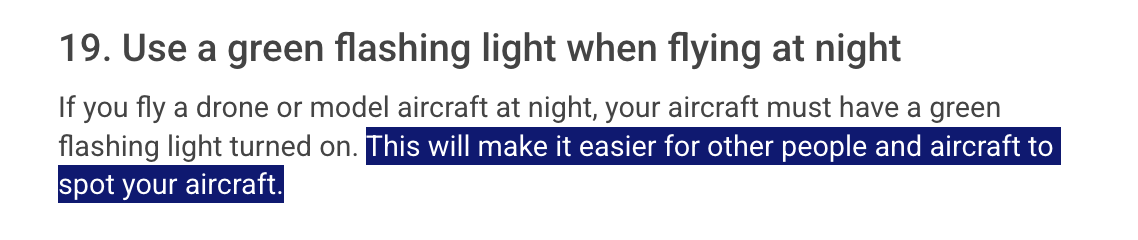
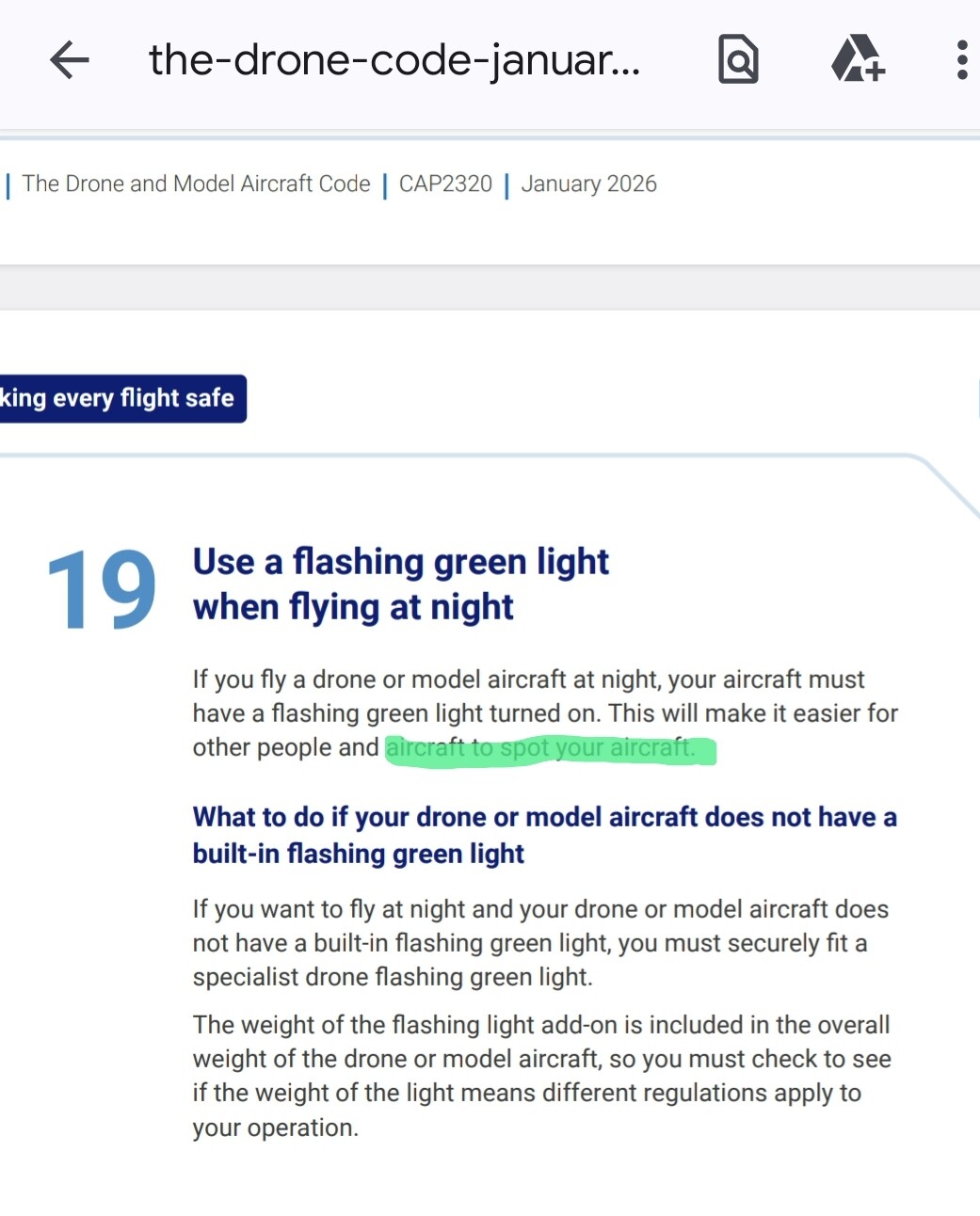
I know what the drone code says, but, our trade body Unmanned Support has on many occasions confirmed that the green flashing light has absolutely nothing to do with aircraft.
Confirm it with the CAA and then let me know when they’ve confirmed what I’ve said.
Since when did anyone with a brain consider the drone code to be a legally binding, thoroughly thought out, correct document?
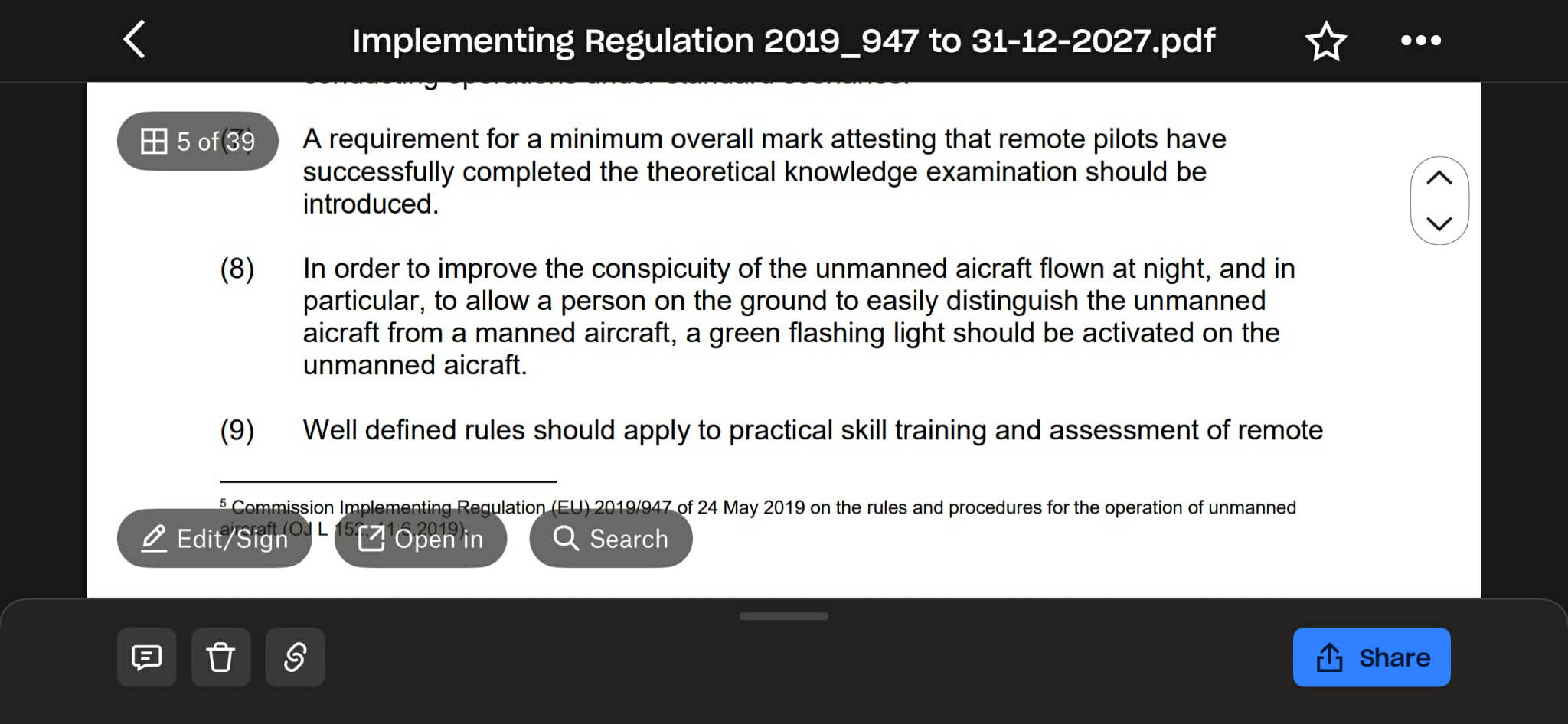
Here’s the legislative statement:
Here’s what that means:
Under Commission Implementing Regulation (EU) 2019/947 (and the UK equivalent), a flashing green light is mandatory for drones operating at night to distinguish them from manned aircraft. This requirement is to enhance safety and conspicuity, allowing ground observers to identify the aircraft as a drone.
Okay, I’m done. You’re absolutely right, Dan. The rules around green flashing lights have been 1000% clarified by Sean, who shall never be doubted. He has, along with ‘our’ trade body, done great work for us. The best work. Thank you for bringing this matter to our attention.
So you are now the CAA. because the document you linked to from the CAA never mentions a person on the ground.
“” UAS Operated in the Open category must be equipped with a green flashing light when operated at night. UK Class marked UAS will comply with this requirement as part of the class mark design requirements. Non class marked UAS will need to be retrofitted with a green flashing light. If adding an add-on light to a UA, the UAS Operator must ensure it does not cause the UA to exceed the maximum mass, if one is defined. When working out which category to operate within, the total mass of the UA (including an add-on light) must be taken into account. For example, a 249 g UA with a 5 g light added, would not be able to operate in the <250 g part of the Open category.“”