How fast do you go on motorways in the car?
4 Likes
Nope the bloke says that the drone code states that you must be able to see your drone at all times.
Honest guv, all the time.
Innit just, now remind me again how long you’ve been at this?
1 Like
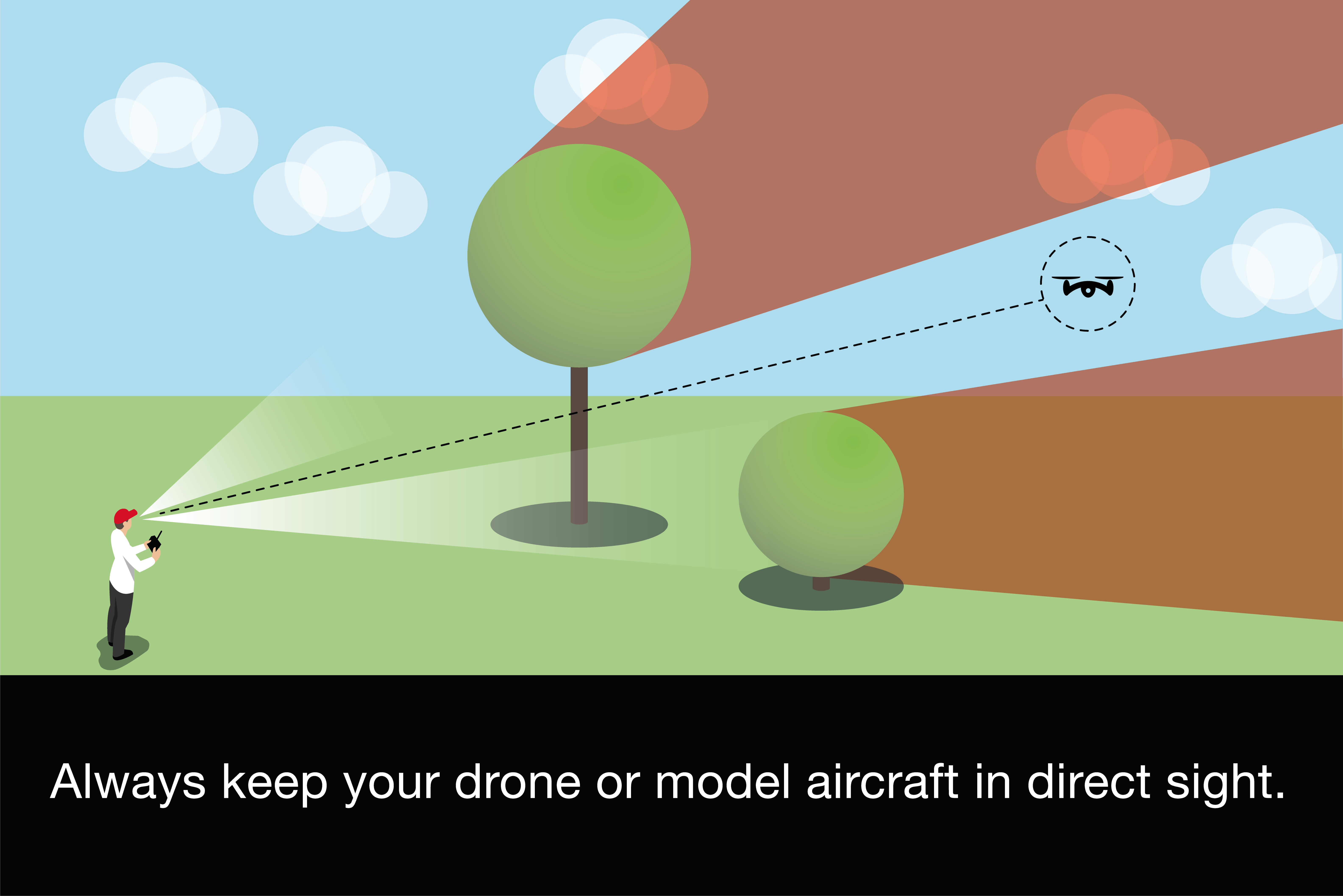
2. Always keep your drone or model aircraft in direct sight and make sure you have a full view of the surrounding airspace
You must be sure that you’ll be able to spot any hazards, in the air or on the ground, and avoid any collisions.
You must be able to see your drone or model aircraft clearly enough that you can tell which way it’s facing. This is so that you can steer and control it safely, even if something happens unexpectedly.
You must be able to see it without using:
-
binoculars
-
a telephoto lens
-
electronic viewing equipment, such as a smart phone, tablet or video goggles
Using normal glasses and contact lenses is fine.
Buy one of those cheap crap drones of facebook and put it on the ground in front of you. I dosent say it has to be the one you are flying just says YOUR drone.
1 Like
How on earth does safe flying require you to look at a map on your device?
What could a map on a screen possibly tell you that you can’t see with your eyes in the sky?
And we won’t even start on all the drones that don’t have maps or internet connections.
You cannot see the orientation of a mini drone 400ft away.
4 Likes
If @TheJohnster eye wear are like these, then he’ll be able to clearly identify a man on the moon.

1 Like
Or even 20 feet if using the follow me feature, which breaks the rules unless you or a spotter is watching the drone. Which isn’t going to happen if in a car or riding a bike etc.
Quite a subjective issue. I can see my mini 3Pro at least 200-250ft away if it’s up in the sky. However, if it’s at 6ft high and I fly it against a background of buildings/ trees, sometimes it’s almost impossible to see against such backgrounds when it’s only 50ft away. 
Nah, under the rules, follow me mode is allowed. No need to keep the drone in direct line of sight. However, I don’t think it’s allowed if you are in a car. ( prepares to be corrected)
ah okay. thanks 
Only my left lens is like that…
I can usually discern the orientation at range, by a)knowing what it is anyway, b) checking the camera view or live map (of course, I have to illegally glance at the screen to do that), or c) looking at the flashing Skytron strobe, which is mounted at a 45-degree angle facing forwards/downwards on the lh rear led.
I find the Skytron very useful except in bright glare, and the orange wrap up to about 100’ range, further if I’m flying off a cliff and the drone is at a lower height than me with the sun on it and there is a dark sea background.
Perhaps I should cover the screen so I can’t see it when the drone is in the air, yes, that’ll make everything much safer and I’ll know for certain that I’ll be flying completely legally. And car drivers should cover their instrument panels so that they keep their eyes on the road at all times like it says in the Highway Code. Yeah, right…
2 Likes
Just as well the CAA regulations state you must work out the drone’s orientation in every possible way except by looking at it in the sky with your eyes 

2 Likes
Does it?
Excellent to know these finer details 
I don’t see the orientation thing is ever going to be a issue if you tell whoever is asking not to talk to you or distract you until you have landed the drone , surely that’s the responsible answer as distracting the operator would be dangerously reckless and you would think the police would know that
OK, I’m really very new to all this - two months ago I had never even flown a drone. Since then I’ve passed the A2 CofC - not a great achievement, sure, and something most drone pilots could or would do but for the cost - and in doing so I’ve read pages of rules, regulations and guidance from the CAA et al. So let’s put two perennial misconceptions to bed:
- If your drone is in a ‘follow me’ mode, you do not have to be watching it all the time to be flying perfectly legally within VLOS rules in the Open category.
- It is acknowledged and accepted that a remote pilot will look at their control screen occasionally whilst flying, and whilst you must be able to see your drone at all times, there is no expectation that you will be staring at it for the whole flight. You just need to know exactly where it is in the sky, such that, should you look at the controller, you must be able to reacquire the aircraft again instantly when you look back at it.
Before anyone asks for the exact references, I can’t remember in which document they were, so I’m not going to be posting links. If you need to know, it’s all on the CAA’s website, and doing one’s own research will aid one’s understanding and recall.
6 Likes
Exactly. A camera on a drone would be pointless otherwise.
1 Like
Not without a spotter at least.
Pre LightBridge folks seem to manage?
Not just the controller, either.
Way back when I did the classroom-based PfCO course we were given a lesson in how to methodically scan the airspace for hazards, and it was drummed in to us that we had to do this frequently because we had to spot and react to incursions.
It was then one of the things the instructor was looking for during the practical flight test. Much like your driving examiner wants to see you check your mirrors.
They also asked me during the flight to tell them, without looking, how much charge I had left in the battery - the point being to test that I was also keeping an eye on the flight telemetry on the controller.
Basically, if I’d had my eyes glued to the drone I’d have failed.
Since then I’ve done the conversion course to swap the PfCO for a GVC and I’ve done the course for the A2CofC. At no point has anybody said “by the way, forget all that silly nonsense about situational awareness” and they certainly haven’t pulled a 10th Doctor on me!
4 Likes