While drone outings focus on getting birds-eye perspectives from up above, the steep, dense ravines of the Brecon Beacons’ Waterfall Country are predominantly a boots-on-the-ground experience. Nestled deep inside protected oak woodland, walking the trail with a camera reveals some of the most dynamic water carved landscapes in the UK.
Starting out from Gwaun Hepste on an early autumn morning, the circular route links together the Mellte and Hepste rivers via a high forestry track, with steep side spurs plunging down to the gorge floors. The first stop on the Mellte is Sgwd Clun-Gwyn (Fall of the White Meadow). Viewed from the high cliff rim, the river hits a sudden geological drop-off, thundering over a sheer sandstone step while tangled storm debris clings to the gorge walls.
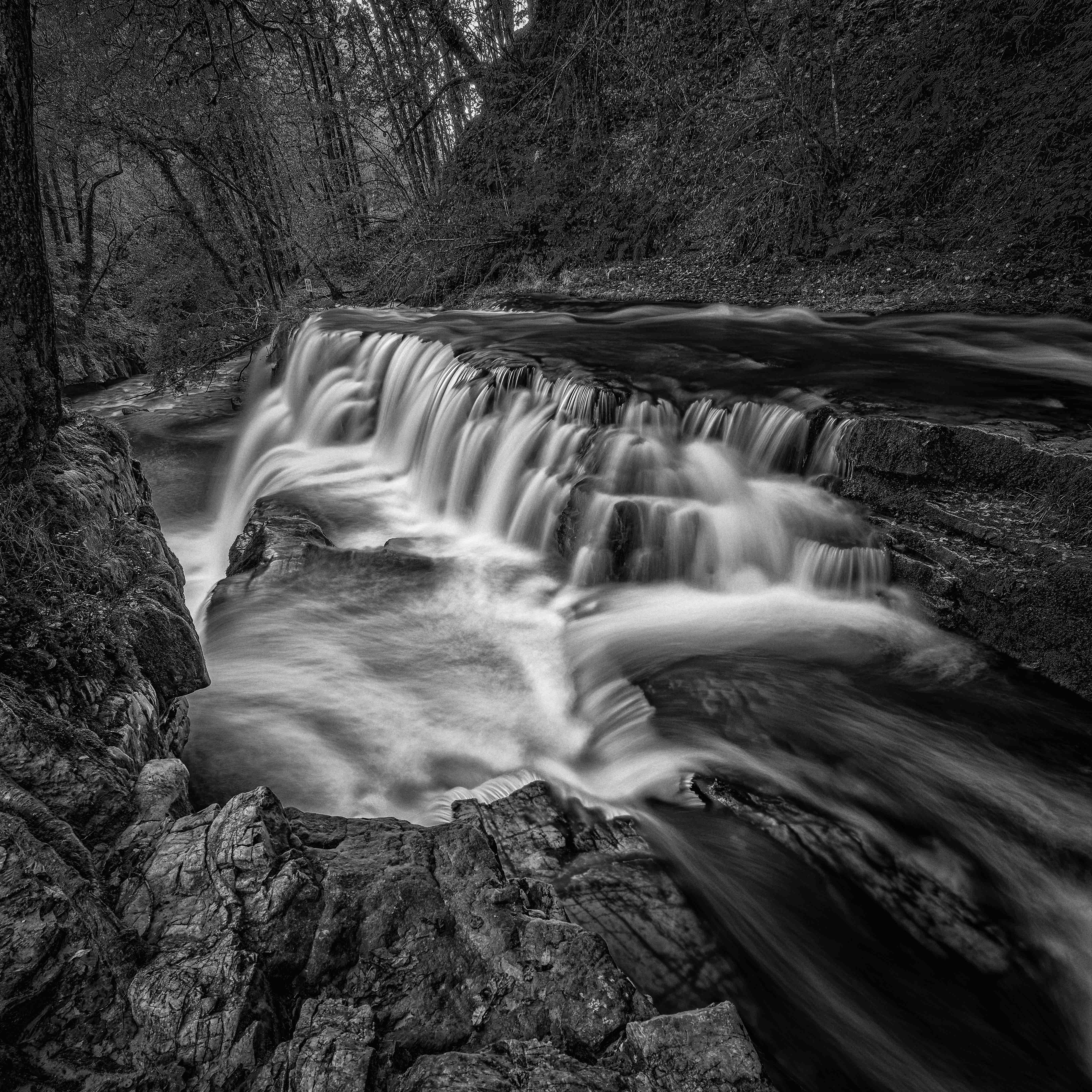
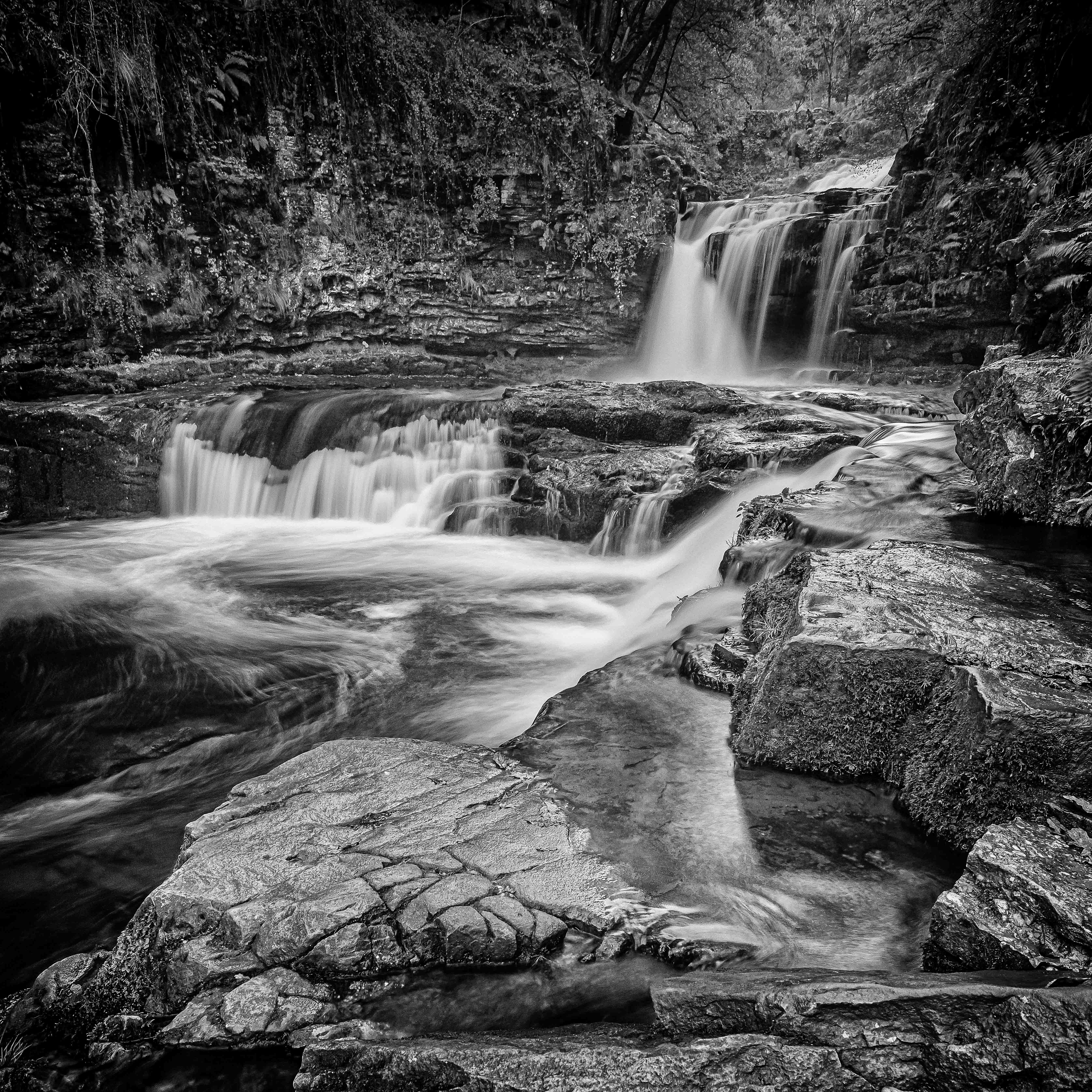
Heading further downstream brings you to the intricate, multi-tiered architecture of Sgwd Isaf Clun-Gwyn(Lower Fall of the White Meadow). Easily the most complex cascade system in the valley, the river here breaks across broad bedrock terraces and stepped limestone chutes before tumbling into a deep gorge pool. The sheer scale of the rock shelves makes you appreciate the raw hydraulic force that has chiselled this canyon over millennia.
A short push further brings you to Sgwd y Pannwr (Fall of the Fuller). Historically used as a natural water-powered wash for wool, the river spans wide across flat Farewell Rock slabs. Heavy winter spates wash massive driftwood logs down from the upper moorlands, leaving weathered trunks wedged tightly into the rock weir while white water pours over in broad sheets.
The final highlight means tackling the steep descent of roughly 170 slick stone steps into the Hepste gorge to reach Sgwd yr Eira (Fall of the Snow). Hidden in an amphitheatre of dark shale, the entire river plunges 50 feet in a sheer white curtain. The unique geology has eroded a deep overhang behind the torrent, creating the famous natural pathway that lets walkers traverse the gorge directly behind the roar of the falls.
The slick limestone, spray-soaked stairs, and muddy climbs back up to the rim will give your legs a proper workout, but as a grounded study of river geology and wild Welsh woodland, it’s hard to beat.