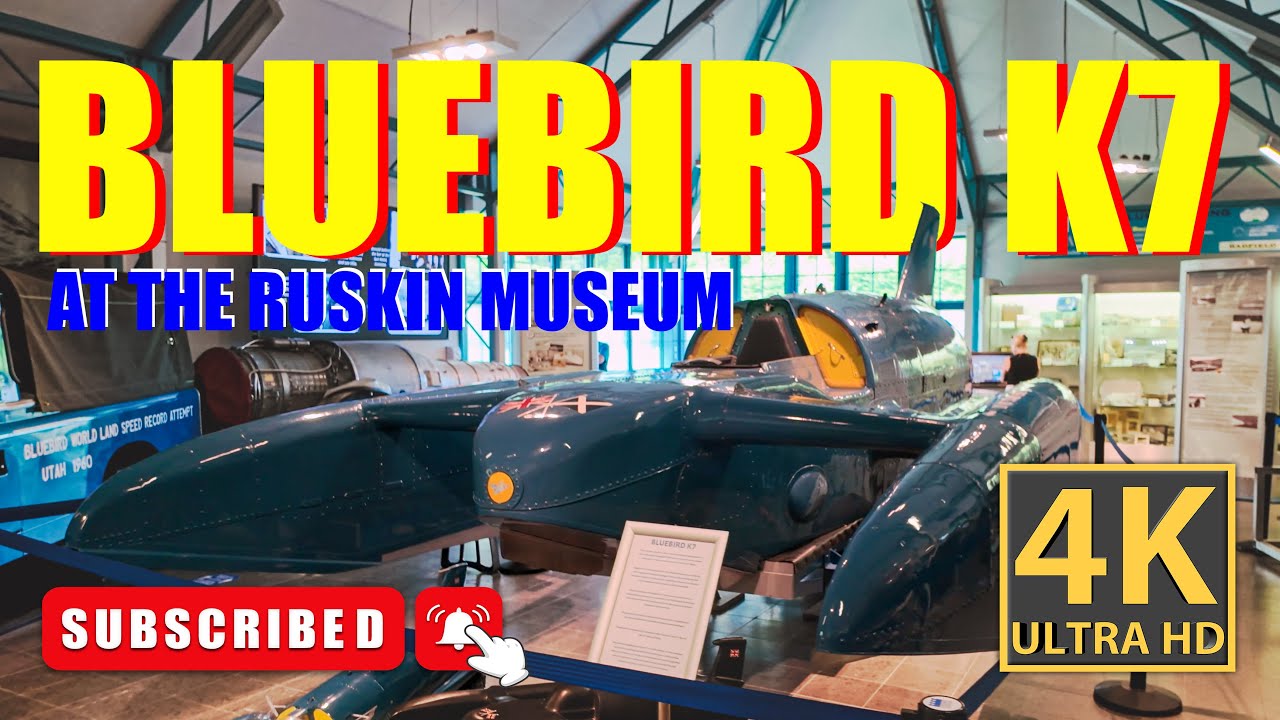
This video explores the story behind Bluebird K7: the engineering, the drive to break 300mph on water, and the tragic events of January 4th, 1967, when Donald Campbell lost his life on Coniston Water. Using my museum footage and archival material, I look at what went wrong on that final run, and why Bluebird still matters today.
The Ruskin Museum’s Bluebird Wing doesn’t just preserve the story of the record-breaking hydroplane — it preserves a moment in British history that left a lasting impression on an entire generation.
This isn’t just a museum visit. It’s a personal journey back to a story that stayed with me from childhood, and a chance to finally connect with the machine and the man behind it.
The story of Bluebird after the crash is also the story of one man’s determination. Bill Smith, a local engineer and diver, led the tireless effort to locate and recover Bluebird K7 from the depths of Coniston Water.
The recovery, completed in 2001, was not about profit or spectacle. It was driven by a belief that Bluebird — and Donald Campbell’s legacy — deserved to be brought home, understood, and preserved.
What followed was years of painstaking restoration, carried out with extraordinary attention to detail. Much of what we see today is the result of that dedication — a craft conserved as authentically as possible, bearing both its history and its scars.
However, the journey after recovery was not without controversy. Legal disputes arose over the ownership, control, and public display of Bluebird, leading to long-running and often difficult disagreements about where the craft should be housed and how it should be presented.
Despite these challenges, Bluebird ultimately returned to Coniston and to the Ruskin Museum — a place deeply connected to its story. Whatever the legal complexities behind the scenes, what remains undeniable is the commitment that ensured Bluebird was not lost to history.
If you’re interested in engineering, speed records, or British motoring history, this is a story worth remembering.
