I have just added this to the map of places to fly your drone at Drone Scene:
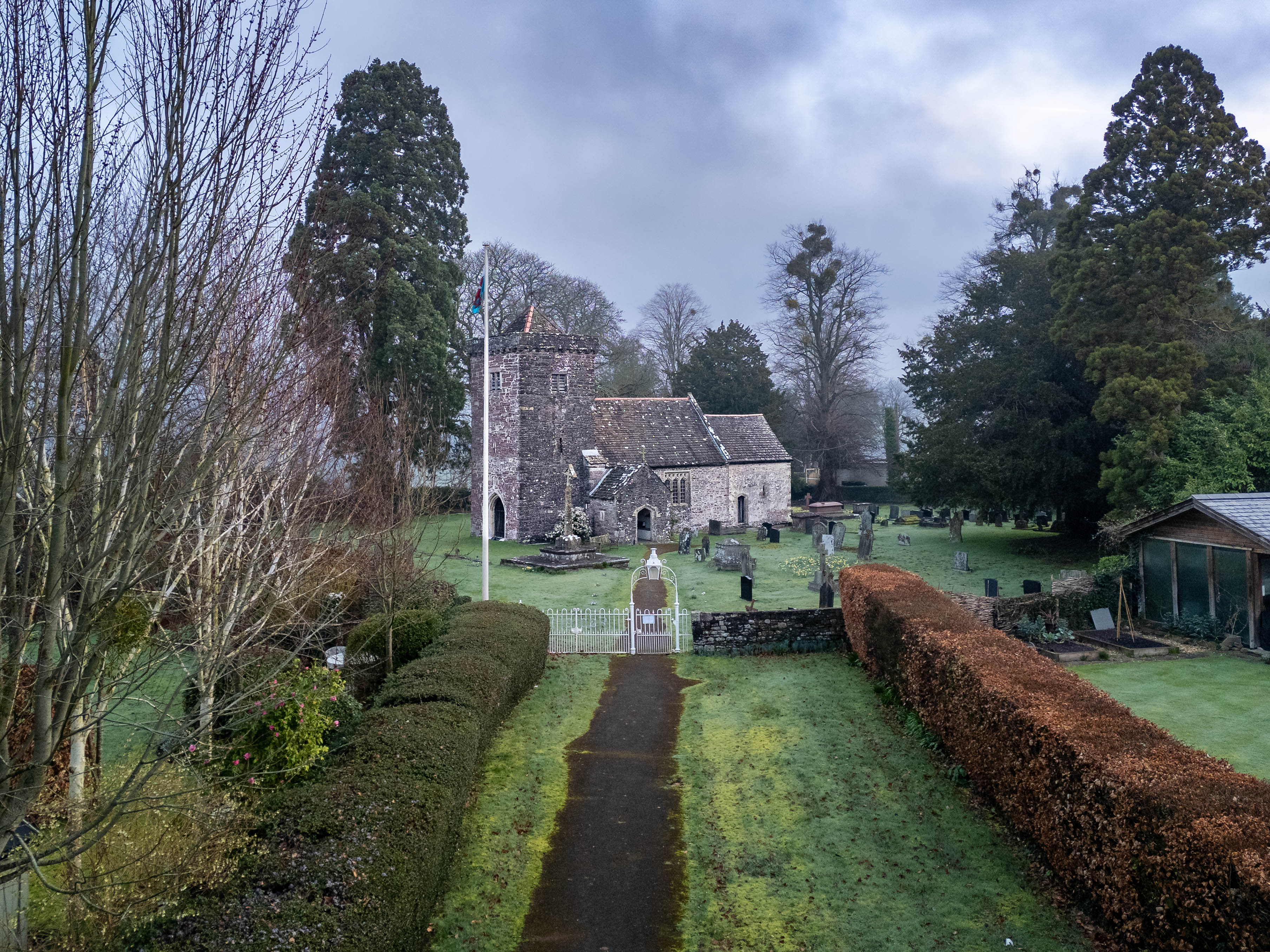
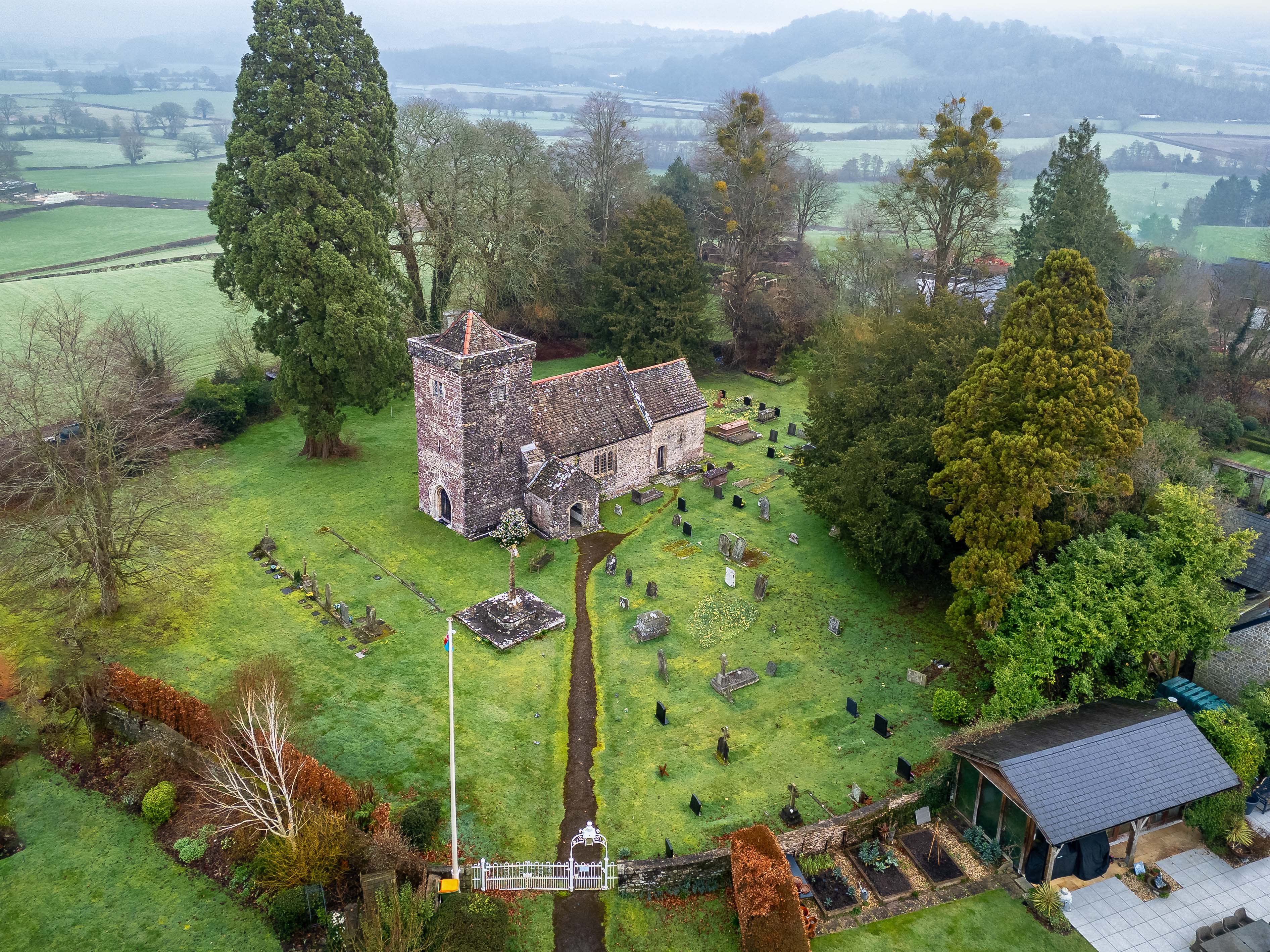
St Andrew’s is a quintessential Welsh border church, primarily dating to the 14th and 15th centuries, though it occupies a much older sacred site. Its most famous historical treasure is a Roman funerary monument—the Julian Gaudentius stone—discovered beneath the floor, dedicated to a soldier of the Second Augustan Legion based at nearby Caerleon.
The Julian Gaudentius stone is one of the most significant Roman artifacts found in a Welsh parish church. Discovered in the late 18th century, it is a Di Manibus (dedicated to the spirits of the dead) funerary monument. The stone's presence suggests that the site of St Andrew’s may have been a Roman villa or a roadside burial ground long before the first Christian timber or stone church was erected.
Roman law forbade burials within the walls of a fortress, so soldiers were often buried along the roads leading out of Caerleon.
The architectural character of the church is defined by its sturdy, defensive-looking western tower and a traditional nave and chancel.
The image highlights the church’s secluded position within the rolling Monmouthshire landscape. The sprawling graveyard, dotted with weathered headstones, underscores its role as a focal point for the community over the centuries.
The originator declared that this location was not inside a Flight Restriction Zone at the time of being flown on 25/02/2026. It remains the responsibility of any pilot to check for any changes before flying at the same location. Landowner permission may be required before taking off.