9 Likes
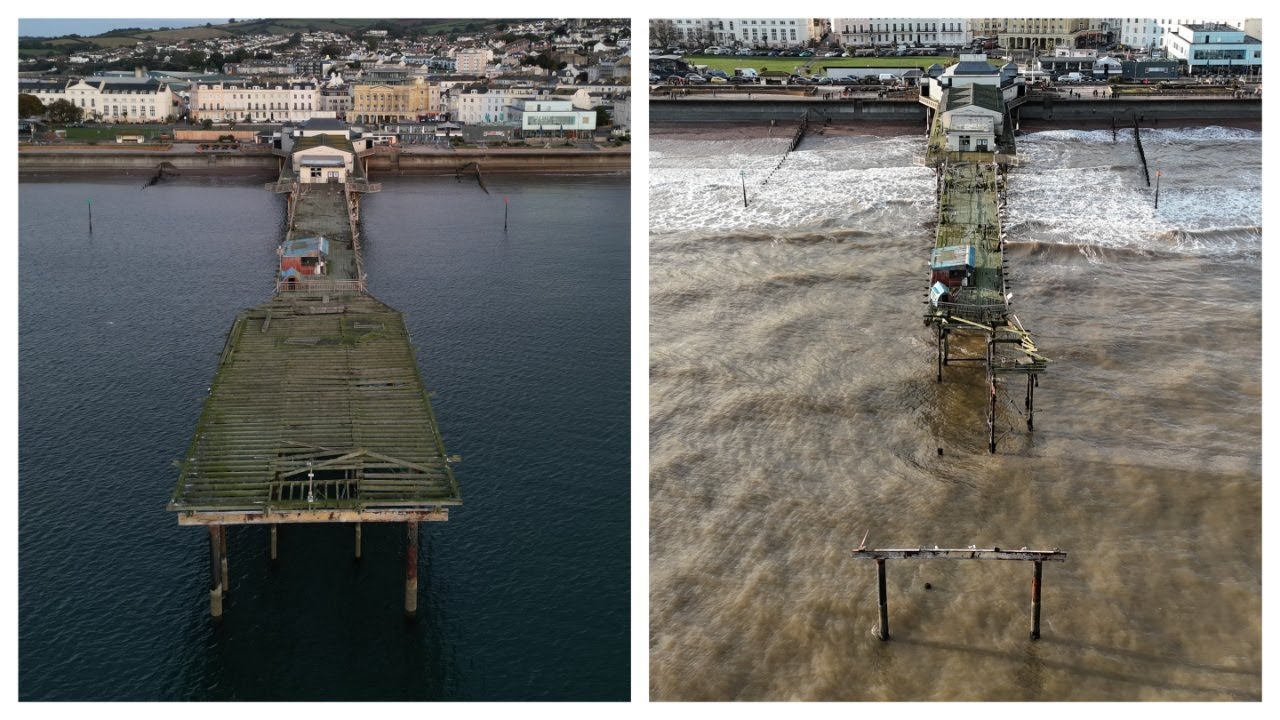
Not really surprised, was a very poor state of repair
I guess they won’t even be interested in any sort of rebuild 
2 Likes
Only question really is will they pay for it to be safely removed, or just let it gradually collapse while being an eyesore and posing a danger ? 
2 Likes
I suspect it will be the latter. I quite agree with it looking an eyesore. It’s not quite as photogenic as the fire damaged Brighton West Pier.
2 Likes
Holy crap, that took a battering! Living next to the sea I get to witness the destructive power it has first hand. And as a frequent coastal flyer myself I appreciate your posting this video. Very nicely captured footage 
1 Like
Surely, a video for the historical record.
Do members posting on YouTube tend to just use YouTube’s default restrictive reuse licence or open up reuse of their video with a Creative Commons Attribution license? Just pondering.
Great drone footage but very sad.
1 Like
You have described Southampton’s former Royal Pier to a tee! What an absolute mess! 
Problem with derelict piers is that they aren’t actually breaking any laws and there is no obligation on their owners to remove them. They’re not any more of a hazard to shipping than they were when they were in use and open to the public, and by and large their owners do not have the resources to remove them.
The history of most (not all) seaside piers goes, roughly, pier build in Victorian times to attract coastal passenger steamer trade, structure out into deep enough water to berth a paddle steamer, sometimes 2 or 3. Because it was very rapidly realised that these structures were outside the jurisdiction of local bye-laws, it was not long before they became the haunts of ‘undesirables’; prostitutes, card sharps, funfairs, and entertainments of the sort not tolerated ashore, burlesques, and suchlike, and reputations were made. Many lost their connection to the paddle steamer business, and became used solely in this way. Some, like Blackpool, developed into the sort of venues played by relatively respectable ‘family’ artistes. Illegal gambling, drinking, and general shenannigans were the norm. Coppers’ beats did not include them. In Wales, you could get a drink on a Sunday on a pier.
They were, as a result, the despair of the ‘nice’ people of the town, who considered that they attracted the ‘wrong element’ and were unfair competition for ‘legitimate’ theatres and businesses ashore. Buildings on them were never subject to planning regs and were gaudy and brightly coloured, they were by and large an embarrassment, not that these same people didn’t pull their hats down, pull up their collars, look around furtively, and indulge themselves. So, when the hard times hit, there was little sympathy from the local movers and shakers on the council, and outright hostility from the Round Table or the Women’s Institute. Many closed because their owners had gone bankrupt, and they were left to rot. Fires were usually the next step, easily blamed on faulty wiring that had never been done to shore standards of safety, and usually insurance-related.